- Selected for the 2026 Leader Research Program (Type A)... Conducting 9 Years of Research Starting June 2026
- Building a Manufacturing AI System Connecting Data Collection to Decision Making and Physical Execution
- Developing 'MxFM', a Foundation Model Tailored to Manufacturing Tasks with Inherent Interpretability and Explainability
- Real World Demonstration on Production Lines of Partners Including Nongshim, Synustech, and DMI
A research team led by Professor Byeng-dong Youn from the Department of Mechanical Engineering at Seoul National University has officially launched a project to build a 'Full Stack AI Factory' that connects the entire process of manufacturing from shop floor data collection to reasoning, decision-making, and physical execution through artificial intelligence.
The research team's project, 'Task(x) Specific Foundation Model for Full Stack AI Factory', was selected for the 2026 Leader Research Program (Type A). Over a nine year period starting in June 2026, the team plans to develop a foundation model specialized for manufacturing tasks and apply it to actual production lines to lay the groundwork for manufacturing autonomy.
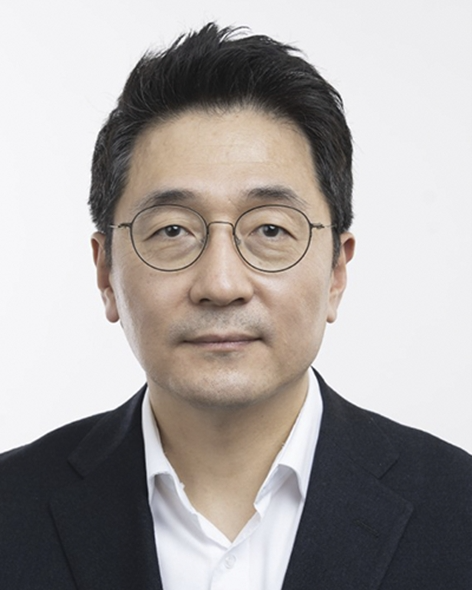
Professor Byeng-dong Youn, Department of Mechanical Engineering, Seoul National University
Expanding Foundation Models, But a Vacant 'Manufacturing Domain'
A foundation model is a general purpose AI model pre trained on large scale data that can be adapted to various tasks. Recently, the scope of application has been expanding rapidly, ranging from text models like GPT and Gemini to image/video models like Sora, as well as models that process time series data such as Chronos and TimesFM. However, in the manufacturing domain—where high frequency vibration/current signals, process history, and vision data coexist in complex ways—there is a complete absence of a comprehensive general purpose foundation model.
Manufacturing data exhibits heterogeneous formats across processes, equipment, and sensors, lacking explicit semantic structures like natural language, making it difficult to use directly for AI training. Models segmented by individual problems face limitations in development and management. Furthermore, integrating diverse data types into a single model makes it increasingly difficult to explain the rationale behind AI decisions. The volume of information human operators must handle and the physical constraints of equipment infrastructure have also acted as major hurdles to AI adoption.
Realizing a Two Stage End to End Full Stack AI Factory
To overcome these limitations, the research team is developing 'MxFM (Manufacturing x Foundation Model)', a foundation model specialized for manufacturing tasks. MxFM is designed to integrally train on various manufacturing datasets so it can be utilized across diverse tasks such as quality control, maintenance, and safety.
The research will proceed in two stages. In Stage 1, the team will establish a 'manufacturing task specific foundation model' that enables AI to understand manufacturing data and apply it across various operational domains.
First, manufacturing data is redefined based on five criteria: process step, operation event, equipment state, sensor role, and task objective. Subsequently, by building a hierarchical metadata structure that categorizes data relationships alongside a framework to calibrate variations across equipment and sensors, the team will establish an 'AI Ready Manufacturing Data' system that can be directly used for AI training without separate, complex preprocessing. Furthermore, through data generation models reflecting high frequency signal characteristics and physical consistency verification techniques, the team plans to secure full regime operational data encompassing rare anomaly and failure (edge/corner case) scenarios.
Building on this data framework, a task specific manufacturing foundation model applying a Mixture of Experts (MoE) architecture will be developed. The MoE structure places multiple specialized models within a single framework, selecting and deploying the appropriate expert model based on input data and task requirements. The team aligns high frequency and low frequency time series data with images into a shared representation space while preserving their unique physical properties. Interpretability is secured by utilizing tag information that captures task contexts to segment learning domains for quality, maintenance, and safety.
Additionally, by tracking which expert models contributed to a decision, the team will develop an inherently explainable model that presents AI decision rationales with greater transparency. The vision is to build an explainable manufacturing AI model that allows users to verify reasoning processes rather than merely outputting raw results. While strategically utilizing existing general foundation models for images and low frequency data, the research team will focus its capabilities on developing core technologies for processing high frequency signals, which serve as crucial data on the manufacturing floor.
In Stage 2, MxFM will be applied to actual manufacturing tasks to realize a full stack AI factory connecting data collection, decision making, and execution. The team will integrate task specific adapters for quality classification, equipment restoration, and safety object recognition directly into MxFM, tailoring a single base model to specialized manufacturing functions.
The team will also construct manufacturing decision making agents that recommend action priorities alongside decision rationales based on model analytics. By applying lightweight technologies that preserve explainability while minimizing performance loss, the research team plans to implement a multi scale execution architecture spanning server, edge, and on device environments.
Field demonstrations will incrementally evaluate not only the inference performance of AI models but also their ability to execute decision outcomes on actual production lines. Technologies will be validated across production lines of partner companies and institutes, including Nongshim, Synustech, and the Daegu Mechatronics & Materials Institute (DMI).
Moving Beyond Fragmented Manufacturing AI to 'Manufacturing Autonomy'
This research aims to unify conventional manufacturing AI structures that have remained fragmented across data, models, decision making, and execution. By establishing an end to end full stack AI system extending from data collection to physical execution, the project aims to lay a foundation for true manufacturing autonomy.
Professor Byeng-dong Youn, who leads the project, has steadily expanded his research scope from core manufacturing AI technologies to real world industrial deployments. To date, he has led a total of 95 industry academic projects (86 completed, 9 ongoing, with total research funding of approximately 25 billion KRW) and published numerous SCI papers in leading international journals in manufacturing systems, such as Reliability Engineering & System Safety (RESS), Mechanical Systems and Signal Processing (MSSP), and the International Journal of Mechanical Sciences (IJMS).
To bring research outcomes to industrial applications, Professor Youn founded ONEPREDICT, an industrial AI predictive maintenance enterprise, in 2016. ONEPREDICT's solutions have been deployed at major facilities, including LG Energy Solution, GS Caltex, Korea Aerospace Industries, and Korea Electric Power Corporation (KEPCO). Professor Youn was named to Forbes Korea A150 in 2024 and, starting in 2025, serves as Co Chairman of the Ministry of Trade, Industry and Energy's AI Factory Manufacturing AX Alliance Project, leading national manufacturing AI strategies.
Source: Newswire (https://www.newswire.co.kr)


 ...
 ...

 ...
 ...


A research team led by Professor Byeng-dong Youn from the Department of Mechanical Engineering at Seoul National University has officially launched a project to build a 'Full Stack AI Factory' that connects the entire process of manufacturing from shop floor data collection to reasoning, decision-making, and physical execution through artificial intelligence.
The research team's project, 'Task(x) Specific Foundation Model for Full Stack AI Factory', was selected for the 2026 Leader Research Program (Type A). Over a nine year period starting in June 2026, the team plans to develop a foundation model specialized for manufacturing tasks and apply it to actual production lines to lay the groundwork for manufacturing autonomy.
Professor Byeng-dong Youn, Department of Mechanical Engineering, Seoul National University
Expanding Foundation Models, But a Vacant 'Manufacturing Domain'
A foundation model is a general purpose AI model pre trained on large scale data that can be adapted to various tasks. Recently, the scope of application has been expanding rapidly, ranging from text models like GPT and Gemini to image/video models like Sora, as well as models that process time series data such as Chronos and TimesFM. However, in the manufacturing domain—where high frequency vibration/current signals, process history, and vision data coexist in complex ways—there is a complete absence of a comprehensive general purpose foundation model.
Manufacturing data exhibits heterogeneous formats across processes, equipment, and sensors, lacking explicit semantic structures like natural language, making it difficult to use directly for AI training. Models segmented by individual problems face limitations in development and management. Furthermore, integrating diverse data types into a single model makes it increasingly difficult to explain the rationale behind AI decisions. The volume of information human operators must handle and the physical constraints of equipment infrastructure have also acted as major hurdles to AI adoption.
Realizing a Two Stage End to End Full Stack AI Factory
To overcome these limitations, the research team is developing 'MxFM (Manufacturing x Foundation Model)', a foundation model specialized for manufacturing tasks. MxFM is designed to integrally train on various manufacturing datasets so it can be utilized across diverse tasks such as quality control, maintenance, and safety.
The research will proceed in two stages. In Stage 1, the team will establish a 'manufacturing task specific foundation model' that enables AI to understand manufacturing data and apply it across various operational domains.
First, manufacturing data is redefined based on five criteria: process step, operation event, equipment state, sensor role, and task objective. Subsequently, by building a hierarchical metadata structure that categorizes data relationships alongside a framework to calibrate variations across equipment and sensors, the team will establish an 'AI Ready Manufacturing Data' system that can be directly used for AI training without separate, complex preprocessing. Furthermore, through data generation models reflecting high frequency signal characteristics and physical consistency verification techniques, the team plans to secure full regime operational data encompassing rare anomaly and failure (edge/corner case) scenarios.
Building on this data framework, a task specific manufacturing foundation model applying a Mixture of Experts (MoE) architecture will be developed. The MoE structure places multiple specialized models within a single framework, selecting and deploying the appropriate expert model based on input data and task requirements. The team aligns high frequency and low frequency time series data with images into a shared representation space while preserving their unique physical properties. Interpretability is secured by utilizing tag information that captures task contexts to segment learning domains for quality, maintenance, and safety.
Additionally, by tracking which expert models contributed to a decision, the team will develop an inherently explainable model that presents AI decision rationales with greater transparency. The vision is to build an explainable manufacturing AI model that allows users to verify reasoning processes rather than merely outputting raw results. While strategically utilizing existing general foundation models for images and low frequency data, the research team will focus its capabilities on developing core technologies for processing high frequency signals, which serve as crucial data on the manufacturing floor.
In Stage 2, MxFM will be applied to actual manufacturing tasks to realize a full stack AI factory connecting data collection, decision making, and execution. The team will integrate task specific adapters for quality classification, equipment restoration, and safety object recognition directly into MxFM, tailoring a single base model to specialized manufacturing functions.
The team will also construct manufacturing decision making agents that recommend action priorities alongside decision rationales based on model analytics. By applying lightweight technologies that preserve explainability while minimizing performance loss, the research team plans to implement a multi scale execution architecture spanning server, edge, and on device environments.
Field demonstrations will incrementally evaluate not only the inference performance of AI models but also their ability to execute decision outcomes on actual production lines. Technologies will be validated across production lines of partner companies and institutes, including Nongshim, Synustech, and the Daegu Mechatronics & Materials Institute (DMI).
Moving Beyond Fragmented Manufacturing AI to 'Manufacturing Autonomy'
This research aims to unify conventional manufacturing AI structures that have remained fragmented across data, models, decision making, and execution. By establishing an end to end full stack AI system extending from data collection to physical execution, the project aims to lay a foundation for true manufacturing autonomy.
Professor Byeng-dong Youn, who leads the project, has steadily expanded his research scope from core manufacturing AI technologies to real world industrial deployments. To date, he has led a total of 95 industry academic projects (86 completed, 9 ongoing, with total research funding of approximately 25 billion KRW) and published numerous SCI papers in leading international journals in manufacturing systems, such as Reliability Engineering & System Safety (RESS), Mechanical Systems and Signal Processing (MSSP), and the International Journal of Mechanical Sciences (IJMS).
To bring research outcomes to industrial applications, Professor Youn founded ONEPREDICT, an industrial AI predictive maintenance enterprise, in 2016. ONEPREDICT's solutions have been deployed at major facilities, including LG Energy Solution, GS Caltex, Korea Aerospace Industries, and Korea Electric Power Corporation (KEPCO). Professor Youn was named to Forbes Korea A150 in 2024 and, starting in 2025, serves as Co Chairman of the Ministry of Trade, Industry and Energy's AI Factory Manufacturing AX Alliance Project, leading national manufacturing AI strategies.
Source: Newswire (https://www.newswire.co.kr)